HOGG Home Page
  Site Map
Contact Us
Twitter Facebook Rss feed You Tube
 
  • Home
  • About Us
    • About Us
    • History
    • National Advisory Council
    • Staff
    • Employment Opportunities
    • Contact Us
  • Initiatives
    • Initiatives Index
    • Enhancing Services
    • Developing Workforce
    • Improving Public Policy
    • Promoting Education
    • Supporting Research
    • Scholarships and Fellowships
    • Evaluation Reports
  • Resources
    • Online Library
    • Consumer, Youth and Family Resources
    • Hogg Foundation Webinars
    • Policy Resources
    • Evaluation
    • Grantee Resources
  • News & Events
    • Latest News & Events
    • News Release Archive
    • Event Listings
    • Features Archive
    • Blog
  • How to Apply
Quick Links
  • News
  • Features
  • Events
Subscribe

Sign up today to receive the latest news, information and grant alerts from the Hogg Foundation.


Media Contact

Carrie Dyer
Communications Manager
Office: (512) 471-9142
Cell: (210) 287-5434


Painting a Multicultural Counseling Perspective

March 1, 2010

By Marty Becker


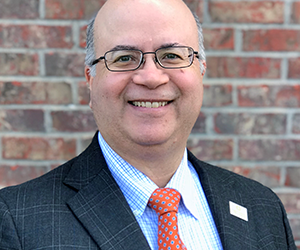
Marty BeckerMy client's mother entered our session concerned as usual about her four-year-old son, who busily inspected the playroom for items with which to express himself that day. He and his parents had been coming to therapy for several weeks to help contain his aggressive behavior and moderate his frequent mood swings.


As his mother shared her concerns, I watched my client open and begin to pour a bottle of paint onto the carpet. My client is like many boys his age, yet he and his family are from a very different cultural environment than my own. I wondered how his mother would respond.


I work at the Austin Child Guidance Center, a community mental health clinic serving low-income families in Central Texas. While I self-identify as Euro-American, many of my clients identify themselves as Latinos, including this mother and son. A multicultural practicum course in the counseling psychology program at The University of Texas at Austin has helped me realize that working with clients and their families can be far more complex because of these ethnic and cultural differences. This course allows me to develop and apply skills based on the initial awareness and knowledge of cultural competency issues I learned in a multicultural counseling class.


Child holding hands with parentsGrowing up on the East Coast in a predominately white suburb of a large city did not prepare me to work with clients with diverse racial, ethnic, socio-economic and sexual orientation identities. My training in multicultural counseling, however, has helped me identify and take into account my own biases and their impact on my work with clients.


In this case, an early sign that I was deep into multicultural counseling territory occurred when my client's mother asked me to speak with her husband "man-to-man" to explain the treatment strategies we chose for their son. Her husband had missed the last session, and she lamented that he doesn't seem to listen to her. She appeared to lack the confidence to explain to her husband the strategy of highly praising their son's positive behaviors while redirecting, but not emotionally reinforcing, his negative behaviors.


My first inclination was to empower her to gain confidence in her communication and emerge as an "equal partner" in the relationship. I hesitated, however, recognizing that I might not understand their world or culture sufficiently to impose my idea of a healthy family dynamic. So I did as she asked and spoke with her husband "man-to-man."


I was glad I listened to her. Her husband shared with me his feelings of pressure and failure as a Latino male who cannot "control his son," especially when his child's outbursts occurred in front of extended family. He shared a deep sense of caring for his son and commitment to helping him, but also high levels of frustration compounded by his family witnessing his son's behaviors and his perceived ineptitude. He also didn't always trust his wife's recount of our sessions as she gets "so emotional" in her descriptions.


I had learned in previous counseling courses that Latino families tend to be more group-focused and family-oriented than European-American families, and that Latino males could express a certain machismo. However, experiencing these cultural dynamics in practice was far more intense.


Fortunately I had the support and feedback from my professor and colleagues in the multicultural practicum class to help me understand and respond appropriately.


I shifted the focus of our counseling work to incorporate more of their extended family dynamics. I provided information to both parents to increase their confidence and literacy around their son's behaviors. We also practiced how to engage their extended family as helpers, rather than observers, in reinforcing their son's treatment.


In the following weeks, the parents reported they were able to more effectively explain and demonstrate our treatment strategies to their parents, grandparents and cousins. My client's parents emerged as teachers, reaching out through their support system and helping others learn to assist their son. Where before their family shared frustration with my client's behavior, they now began to share in the relief and responsibility of seeing progress.


I think back to that session when my client began pouring paint on the floor. Instead of reacting negatively, his mother praised her son's ingenuity in opening the jar, then encouraged him to direct the paint to paper to work out his creative endeavors. With the help of discussions, readings and feedback from the practicum class, I bring a more culturally aware and informed perspective on how to work together with his parents to help him open up and express his feelings in more productive ways.


Not only do I now work better on an interpersonal level with clients of diverse backgrounds, but my personal relationships have also prospered as I gain more clarity of my internal workings – my boundaries, schemas and defenses. The insights I'm gaining help me engage others with more confidence, take more chances and become more flexible in my work. I no longer hide behind the thought that "we are all the same." I know we are not the same, and I'm more curious than ever to learn about those differences.


Marty Becker, a counseling psychology doctoral student at The University of Texas at Austin, is a practicum student at Austin Child Guidance Center. His professor, Dr. Michele Guzmán, is a research fellow at the Hogg Foundation.


3001 Lake Austin Boulevard, Austin, Texas 78703-4200   |   (512) 471-5041

UT Austin Diversity and Community at UT Austin